

When you’re listing your home for sale, the arrival of that very first real estate offer is always an exciting milestone. It’s the moment all your hard work pays off, and it gives you the initial glimpse of the finish line. However, before you start celebrating, remember that this initial piece of paper is just the start of an entirely new conversation.
Every line item on that page represents a choice that will shape your moving timeline, your peace of mind, and the size of your final check. When you know how to look at an offer with a strategic eye, you can turn a good piece of paper into a flawless transaction and set yourself up for a smooth, confident win.
Table of Contents:
- WHAT DO TODAY’S BUYERS ACTUALLY CARE ABOUT?
- WHAT IS YOUR BUYER’S CORE PRIORITY?
- HOW DOES YOUR HOME’S LOCATION AFFECT YOUR SALE?
- HOW SHOULD HOME SELLERS READ AND EVALUATE OFFERS?
- WHAT MAKES A GREAT REAL ESTATE OFFER?
- WHAT ARE REAL ESTATE CONTINGENCIES?
- HOW CAN SELLERS NEGOTIATE A HOME SALE WITHOUT LOSING CONTROL?
- WHAT IS THE HOME CLOSING PROCESS?
- FAQs
- NAVIGATE THE DEAL WITH CONFIDENCE
WHAT DO TODAY’S BUYERS ACTUALLY CARE ABOUT?
Here in Northern Palm Beach County, buyers care about lifestyle much more than square footage.
Because everyone defines that ideal lifestyle a little differently, serious buyers are instantly calculating how your house will handle their actual daily routine. For example:
- Waterfront buyers will settle for a smaller home if it has an excellent, no-fixed-bridge ocean access.
- Upsizing families will take a longer commute if the property has a modern floor plan, extra storage, and guest rooms.
- Second-home buyers will give up a formal dining room for low-maintenance yards, impact glass, and lock-and-leave convenience.
The seller’s negotiation advantage. Today’s buyers are constantly weighing their neighborhood dreams against the reality of monthly costs, insurance, interest rates, and regular upkeep. Once you know exactly what they’re concerned about, you can negotiate with complete confidence. Instead of getting stuck defending your asking price, point directly to your home’s real value, such as its location, turnkey condition, water depth, or built-in privacy. It helps them see why making a solid offer is the right move.
WHAT IS YOUR BUYER’S CORE PRIORITY?
Your buyer’s core priority is the single must-have feature they will actually spend money to get.

Private dockage, direct water access, and proximity to everyday amenities often matter more to luxury homebuyers than cosmetic interior finishes.
While buyers have long wish lists, they will always compromise on minor details. To get the best offers, you must identify and target the non-negotiable needs that drive their final decision.
| Core priority | What the buyer’s looking at | Negotiation cues to watch for |
|---|---|---|
| Lifestyle fit | How the property aligns with their daily routine, such as private boat dockage, golf access, or walkable dining. | Expect a heavy focus on irreplaceable land and water features, which means more flexibility in interior finishes. |
| Financial comfort | The true monthly cost, looking past the mortgage to factor in property taxes, home insurance, and HOA dues. | Watch for requests like closing credits or repair money, which help keep their upfront cash comfortable. |
| Property condition | Upfront peace of mind, specifically checking the age of the roof, wind ratings, impact glass, and updated mechanics. | Anticipate a quick move forward if you provide a pre-listing inspection and clear maintenance records upfront. |
| Timing alignment | How the closing date fits their personal schedule, matching up with rate locks, job moves, or school calendars. | Look for the buyer’s strict timeline. They might pay full price if you offer a flexible closing or a temporary rent-back. |
| Long-term use | Plans for the future, prioritizing home offices, main-floor guest suites, and rooms that adapt as they grow. | Frame the house as a long-term investment, as these buyers rarely walk away over minor, easily fixed cosmetic issues. |
Once you start viewing these categories as negotiation signals, the entire process becomes much more manageable.
For example, when a buyer asks for a closing cost credit, the request may reflect a deeper priority: financial comfort. Rather than simply trying to lower the purchase price, they may be looking for ways to preserve their savings, reduce upfront expenses, or keep their monthly housing costs within a comfortable range.
MORE → Luxury living in Palm Beach: Top market trends for buyers & sellers
HOW DOES YOUR HOME’S LOCATION AFFECT YOUR SALE?
Location affects your home sale because buyers look for specific lifestyles, causing nearby neighborhoods to behave like completely different markets.

Location influences buyer demand because every neighborhood offers a different lifestyle, creating distinct real estate markets even within the same community.
Towns like Jupiter, Tequesta, Palm Beach Gardens, and North Palm Beach do not move as one big market. Even within the same zip code, a waterfront estate on the Intracoastal, a house in a golf community, and a vacant lot are totally different because they attract entirely different buyers.
To build a smart strategy, you need to look at how location impacts your neighborhood through a few simple lenses:
- Location pricing (closed sales): Final sales from the past six months tell you exactly what buyers were willing to pay in your specific neighborhood, not just what sellers hoped to get.
- Location choice (active competition): Current listings show your direct competition and the local options buyers have right now.
- Location demand (pending sales): Homes under contract show how buyers act in your area right now before prices go public.
- Location features (property specifics): Home types change by spot; a waterfront home with boat access is different from a dry-lot home.
HOW SHOULD HOME SELLERS READ AND EVALUATE OFFERS?
Home sellers should read and evaluate offers by looking at how all the terms work together, rather than just focusing on the final sale price.
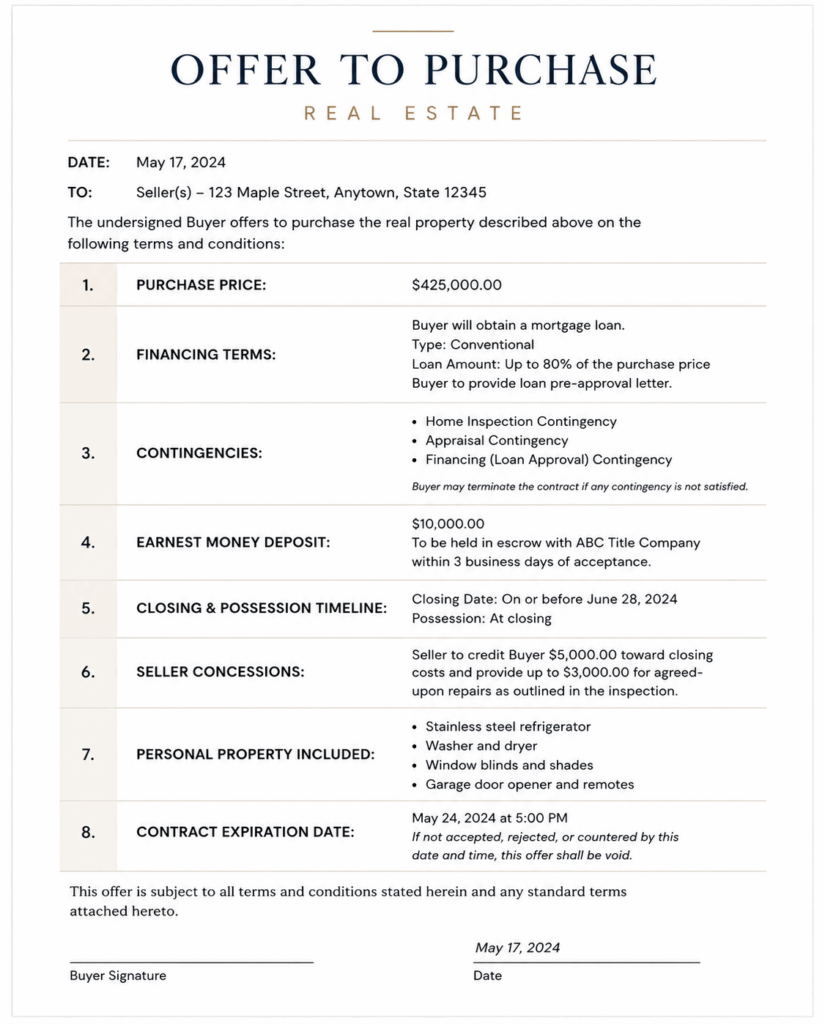
A real estate offer is more than the price. Smart sellers review the terms, timelines, and risks behind the number.
An offer is a living puzzle where every single piece impacts your bottom line. To evaluate a standard contract correctly, you must break down how each specific piece affects your net profit, timeline, and risk.
- Purchase price is the headline number everyone looks at first. It’s definitely important, but remember, it’s still just one piece of the puzzle.
- Financing terms explain how the buyer plans to pay. It shows whether they’re taking out a standard loan, a luxury loan, or bringing a pile of cash to the table.
- Contingencies outline the buyer’s safety nets, such as the home inspection and appraisal rule, that tell you exactly how and when they can legally walk away from the deal.
- An earnest money deposit is the initial good-faith deposit. It’s the buyer’s way of proving they’re committed to the purchase, and it sits safely in a holding account while the deal goes through.
- Closing and possession timelines lock in your finish line, setting the exact date the keys change hands and letting you know when you need to be completely packed up and moved out.
- Seller concessions are cash credits that the buyer asks you to provide to help pay for their closing costs or upgrades.
- Personal property included explicitly states what stays with the house and what goes with you, like the fridge, the washer, or family heirlooms.
- The contract expiration date sets a strict deadline to accept, reject, or counter their offer before the contract becomes void.
Practical questions sellers need to ask when evaluating incoming offers. A big headline price is only as good as the terms attached to it. When an offer lands on your desk, you can easily evaluate it by asking yourself three practical questions:
- What is my realistic net profit after all the closing expenses are paid?
- How solid is this buyer’s financial ability to actually close the deal?
- What specific risks are we taking on during the contract period?
Clean, low-risk offers typically come with a large deposit, verified cash, and short inspection windows. A higher offer that’s tied up in complex financing, strict appraisal protections, or huge requests for seller cash often carries far more risk than it’s worth.
WHAT MAKES A GREAT REAL ESTATE OFFER?
A great real estate offer is one that aligns with the seller’s priorities while still meeting the buyer’s needs.

The strongest offer is the one that protects your net proceeds, timeline, and closing certainty.
While price matters, the strongest offers often combine competitive pricing with terms that lower the seller’s risk.
When you evaluate an offer, scan these key pieces to protect your sale:
- Pre-approval quality: Ensure the lender verified the buyer’s income so you face no financial surprises later.
- Down payment size: Look for a larger down payment to lower bank hurdles and reduce appraisal risks.
- Earnest money deposit: Check for a high good-faith deposit to ensure the buyer is serious about the purchase.
- Loan structure: Identify if the payment is cash, conventional, or jumbo to know how fast the deal will close.
- Appraisal gaps: Look for language forcing the buyer to pay cash out-of-pocket if the bank value comes in low.
- Seller credits: Subtract requested closing cost credits immediately to calculate your true net profit from the sale.
How to calculate the hidden costs of the deal. To understand the true value of an offer, sellers need to consider the costs buyers will factor into their decision-making.
- Upfront closing costs: Buyers usually pay 2% to 5% of the purchase price in addition to their down payment. As the seller, you must subtract your own title fees, agent commissions, and mortgage payoffs from the final payout.
- Ongoing carrying costs: High insurance, flood rules, and HOA fees make buyers cautious. Expect them to verify your roof’s age, wind ratings, flood status, and HOA health. Having related documents on hand builds instant trust and prevents buyers from demanding price cuts later.
WHAT ARE REAL ESTATE CONTINGENCIES?
Real estate contingencies are legal safety nets in a contract that allow a buyer to walk away from a home sale if certain conditions are not met.

Well-structured contingencies can help sellers avoid surprises, streamline negotiations, and increase the likelihood of a smooth closing.
When looking over an offer, you’ll want to watch three main safety nets closely:
- Inspection windows: If this timeline is too long, it gives the buyer way too much time to dig around and suddenly demand a lower price or hit you with a laundry list of repairs.
- Appraisal rules: This clause drags you right back to the negotiating table if the bank’s inspector decides your house is worth less than the price you agreed on.
- Financing clauses: This rule can slow down your entire moving schedule or completely sink the deal at the last second if the buyer’s loan fails.
What to expect from serious buyers
- Serious buyers show they are motivated by doing deep research on your home and offering shorter contract timelines to win the sale.
- Serious buyers will look closely at your property but shorten inspection periods or promise to ask for major structural fixes only.
- Sellers must watch out for buyers who skip safety nets entirely, as early pressure can lead to financing or insurance issues later.
HOW CAN SELLERS NEGOTIATE A HOME SALE WITHOUT LOSING CONTROL?
To negotiate a home sale without losing control, sellers must focus on net profit, set firm timelines, and make calm, fact-based counteroffers.

Strong real estate negotiation strategies help sellers compare offers clearly and respond with confidence.
When offers arrive, keeping control means looking past emotions and tracking the contract details. A low starting offer can still turn into a great deal if the buyer has strong financial backing and clean terms.
- Keep emotions out
Getting a low real estate offer can feel insulting, but you must look strictly at the facts. Check if the buyer has a strong deposit and realistic deadlines before you respond with a calm counteroffer. - Protect your final check
Price cuts, repair credits, and seller credits all take money out of your wallet. A lower purchase price with clean terms can net you more cash than a full-price offer loaded with extra fees. - Use the timeline to your advantage
If you do not want to lower your price, remember that there are a few real estate negotiation strategies you can use. Negotiate for non-monetary perks. You can ask for a specific closing date, a temporary stay-back lease, shorter inspection windows, or a larger non-refundable deposit. - Keep the buyer moving
Once both sides sign the contract, push to keep the momentum going. Long delays give buyers too much time to get nervous and second-guess their choice while waiting for loan approvals.
WHAT IS THE HOME CLOSING PROCESS?
The home closing process is the step in which a signed contract becomes a completed sale.
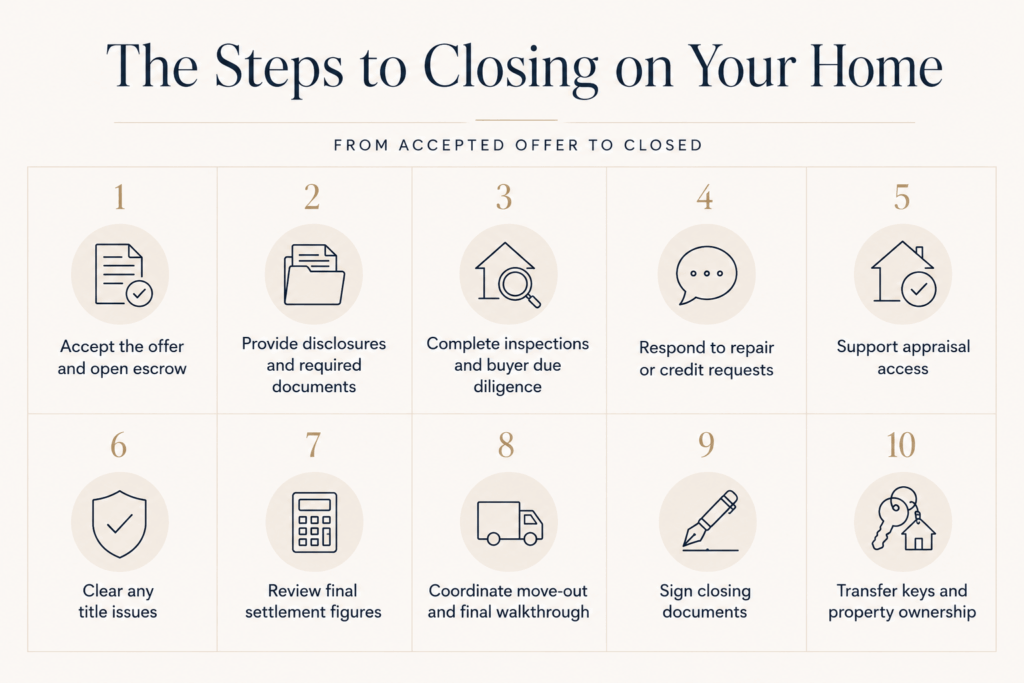
A clear home closing process helps sellers stay ahead of inspections, appraisal, title work, and final signing.
During this phase, ownership of the property officially transfers from the seller to the buyer. While this period can feel quiet from the outside, a significant amount of critical background work must happen before you can hand over the keys.
To ensure a smooth closing, sellers must navigate these key steps:
A clear home closing process helps sellers stay ahead of inspections, appraisal, title work, and final signing. | AI-Generated Image
Closing can become stressful when you are caught off guard by last-minute requests. The most common hurdles that delay closings include unexpected inspection objections, low appraisals, title defects, survey discrepancies, or delayed HOA approvals.
FAQs
How do I know if a real estate offer is serious?
A serious offer comes with a solid lender pre-approval letter or proof of cash, along with a strong earnest money deposit. The buyer will also give you clean terms, realistic deadlines, and quick responses instead of lots of messy conditions.
Can I negotiate after accepting an offer on my house?
Yes, home sellers can negotiate after accepting an offer but usually only if the buyer asks for repairs after their inspection or if the bank appraisal comes back low. Once you sign the main contract, you can’t change the initial purchase price just because a better offer comes along later.
What should I do if a buyer makes a low offer on my home?
If a buyer makes a low offer on your home, don’t take it personally or reject it right away, because a low starting bid can still turn into a great deal. Send back a firm, fact-based counteroffer to keep the conversation going and see how high the buyer is actually willing to go.
How do sellers handle multiple real estate offers?
Sellers can effectively handle multiple real estate offers by looking past the highest price tag and comparing things like cash vs. loans, short inspection windows, and larger deposits. You can either accept the absolute cleanest offer on the table, counter just one buyer, or ask everyone to submit their final “highest and best” terms.
Can a buyer back out after their offer is accepted?
Yes, a buyer can legally walk away even after their offer is accepted and keep their deposit if they find a problem covered by their inspection, appraisal, or loan safety nets. However, if they back out at the last minute without a valid contract reason, sellers may be able to keep their earnest money.
NAVIGATE THE DEAL WITH CONFIDENCE
When the stakes are high, a successful sale comes down to making smart choices and protecting your final check long before the first offer ever arrives.
Mike Ivancevic provides that grounded, local lens as a Palm Beach County native and Managing Broker with Illustrated Properties. He has leveraged an award-winning real estate experience since 2010 to help sellers spot hidden contract risks before they become expensive problems in escrow.
If you’re ready to cut through the noise and map out a winning strategy for your home, call Mike at 561.202.7102 or email him today.