
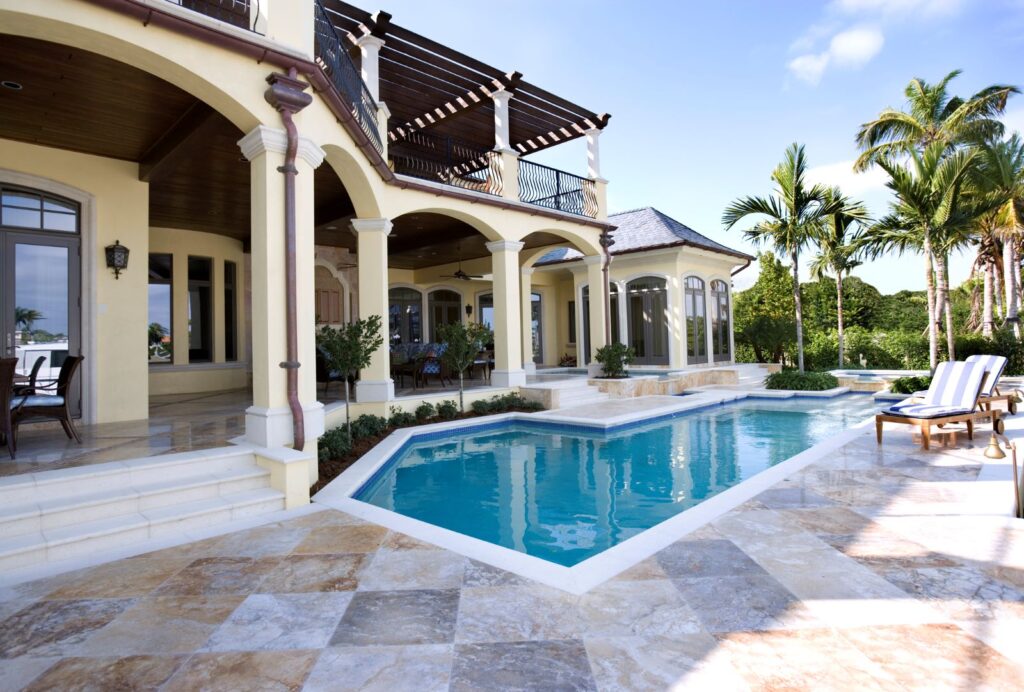
Acquiring a legacy estate is as much about protecting your lifestyle as it is about securing prime real estate. Beyond high-end finishes and floor plans, luxury properties operate like complex, self-contained venues. They demand dedicated luxury home maintenance budgets for specialized equipment, coastal environmental care, and community obligations.
Understanding what a property requires behind the scenes ensures your new home remains a source of comfort and pride rather than unexpected management.
Table of Contents:
- What are the true carrying costs of a South Florida luxury home?
- Why can property taxes change after you buy a South Florida luxury home?
- Why is luxury home insurance so expensive?
- What are the hidden maintenance costs of high-end smart homes?
- What are the unexpected costs of luxury HOA and club memberships?
- How do you choose the right real estate partner to create a legacy home?
- FAQs about the hidden costs of buying a luxury home in South Florida
- Map out your winning strategy in Palm Beach County with Mike Ivancevic
WHAT ARE THE TRUE CARRYING COSTS OF A SOUTH FLORIDA LUXURY HOME?
The true carrying cost of a luxury home is the total ongoing price of ownership beyond your monthly mortgage payment. Managing the hidden costs of buying a home requires building a complete budget for predictable annual expenses, periodic equipment replacements, and property-specific capital items that show up as routine bills or sudden repairs.
To make planning simple and manageable, you can break these ongoing costs down into three clear categories:
| COST CATEGORY | KEY ITEMS AND SERVICES | WHAT TO CHECK BEFORE YOU BUY |
|---|---|---|
| Predictable annual expenses |
|
|
| Periodic replacement costs |
|
|
| Property-specific capital items |
|
|
Running through these three categories during a walkthrough is what keeps generic advice – like setting aside a random percentage of the price – from wrecking your budget.
Because luxury property values are heavily driven by location and land value, inspecting the home systems directly gives you the clearest picture of your true out-of-pocket expenses. Identifying older air handlers, aging seawalls on waterfront properties, or original pool pumps before making an offer lets you plan long-term luxury home maintenance on your timeline, while using those details to request seller credits or adjust your purchase price at the negotiating table.
WHY CAN PROPERTY TAXES CHANGE AFTER YOU BUY A SOUTH FLORIDA LUXURY HOME?
Property taxes often jump after you buy because Florida recalculates a home’s tax value based on what you actually paid for it, not what the seller was paying.


Custom architectural details can add recurring service, repair, and replacement costs long after closing.
Relying on the seller’s past tax bill is a quick way to miscalculate your budget, as their old discounts and caps disappear the moment you close.
That sudden spike happens because long-term owners benefit from Florida’s Save Our Homes cap, which keeps their annual taxable value from rising more than 3% a year. If a seller held onto an estate for a decade, their taxable value stayed low even as the market value climbed. Once the title transfers to you, that old cap disappears, and your starting taxes are recalculated based on what you actually paid.
Your long-term tax bill really comes down to how you plan to use the property:
- If you’re using the estate as a primary residence, applying for a Florida homestead exemption locks in your own 3% cap on future annual tax increases.
- If you’re buying a second home or investment property, it won’t qualify for homestead protection, meaning your annual taxable value can jump by up to 10% each year.
- If you’re moving from an existing primary home within Florida, you can use “portability” to transfer up to $500,000 of your accumulated Save Our Homes tax savings to lower the starting assessed value of your new estate.
Instead of guessing – or trusting an old listing sheet – run your purchase price through the Palm Beach County Property Appraiser’s online tax calculator. It gives you an honest look at your true carrying costs long before you write an offer.
WHY IS LUXURY HOME INSURANCE SO EXPENSIVE?
Luxury home insurance costs more simply because it covers far more than basic square footage.
Between high-end building materials, liability risks, and weather hazards, insuring a luxury property comes down to four main cost drivers:
- Custom reconstruction costs – Fixing hand-crafted woodwork, imported stone, and custom architectural details requires specialized trades, which drives the cost to rebuild a luxury home to its original quality far above standard construction rates per square foot.
- Percentage-based hurricane deductibles – Because hurricane deductibles are calculated as a percentage of your total coverage limit (often 2% to 10%), a storm claim can easily mean paying tens or hundreds of thousands out of pocket before your policy kicks in.
- The need for private excess flood coverage – Federal flood plans cap structural repairs at $250,000, which is a tiny slice of what a waterfront estate is worth. This means you need private excess flood insurance to bridge the gap and fully protect your investment.
- Expanded liability exposure: High-end amenities like swimming pools, boat docks, and regular household staff create greater safety risks, requiring higher baseline liability limits paired with a strong umbrella policy to fully safeguard your assets.
Much like budgeting for ongoing luxury home maintenance or evaluating community dues, getting actual insurance quotes early in your search keeps these recurring bills from surprising you at closing.
💎 PRO TIP: During your walkthroughs, check for existing wind-mitigation features like impact glass, reinforced roof straps, and secondary water barriers. These can qualify you for immediate premium discounts.
WHAT ARE THE HIDDEN MAINTENANCE COSTS OF HIGH-END SMART HOMES?
The hidden maintenance costs of high-end smart homes stem from ongoing software subscriptions, specialized hardware repairs, and the custom technicians required to keep complex automation systems running smoothly.


Smart-home systems can add software, service, and specialist repair costs to luxury ownership.
Because custom home tech ties your whole estate into a single digital ecosystem, managing the hidden costs of buying a home requires building a dedicated budget beyond standard house upkeep.
Managing the expenses of a smart home comes down to three main cost drivers:
- Subscriptions and software platforms
Custom home automation rarely runs for free after installation. Most high-end systems rely on cloud servers, security monitoring, and mobile management apps that require recurring monthly or annual subscription fees to keep remote access, automated routines, and software updates active. - Specialized hardware and proprietary labor
Unlike off-the-shelf smart devices you can swap out yourself, custom luxury systems run on proprietary control boards, switch panels, and wiring. When a module fails, or code needs updating, you cannot simply call a general electrician; you have to hire authorized, system-certified technicians who charge premium hourly rates. - Account handoffs and administrative resets
Inheriting a smart home without the proper credentials can trigger thousands in unexpected setup fees. You need the seller to pass over all master admin accounts, system passwords, source programming files, and original installer contacts. Otherwise, the vendor may have to wipe and rebuild the entire system configuration from scratch.
💎 PRO TIP: Asking for a live tech walkthrough during your inspection period lets you test every control panel and flag recurring service charges, so you can factor those technical details into your overall luxury home maintenance plan before closing and enjoy your automated estate without unexpected headaches.
WHAT ARE THE UNEXPECTED COSTS OF LUXURY HOA AND CLUB MEMBERSHIPS?
The unexpected costs of luxury HOA and club memberships come from initiation fees, equity contributions, recurring dues, and special assessments that sit completely outside your property’s purchase price.

Review luxury community club dues and assessments before making an offer.
While a gated enclave might cover high-end security and pristine landscaping, joining a private golf or country club adds a distinct set of ongoing financial obligations to your lifestyle budget.
Ongoing financial obligations can be broken down into four primary cost drivers:
- Initiation and equity contributions
Joining a private club or luxury community often requires significant upfront payments. Understanding whether an equity contribution is refundable and how long that payout takes under the club’s governing rules when you sell is vital before making a commitment. - Ongoing dues and lifestyle minimums
Recurring monthly or annual dues cover core operations, but hidden operational costs add up quickly. Fees for food and beverage minimums, locker rentals, cart charges, and private trail access frequently sit on top of your baseline membership tier. - Special assessments and capital projects
Gated communities and private clubs periodically pass major renovation costs onto members. Board-approved assessments for road resurfacing, golf course redesigns, clubhouse updates, or drainage repairs can require substantial lump-sum payments if reserve funds fall short. - Transfer fees and mandatory membership tiers
Many luxury developments require buyers to purchase a specific tier of club membership upon closing. Verifying transfer fees, application costs, and resignation terms directly with management prevents expensive surprises during escrow.
Verifying membership fees and HOA guidelines directly with the club office is the single best way to uncover your true carrying costs. Reviewing recent board minutes, reserve study reports, and current financial statements alongside those official fee sheets lets you account for these hidden costs during due diligence, ensuring the community aligns with both your lifestyle and long-term financial goals.
HOW DO YOU CHOOSE THE RIGHT REAL ESTATE PARTNER TO CREATE A LEGACY HOME?
Choosing the right real estate partner comes down to testing an agent’s technical knowledge and local depth before you hire them.
To ensure your advisor can uncover all the hidden costs of buying a home and protect your long-term capital, use these actionable steps during your initial interviews:
- Ask for hyper-local waterfront experience
Have them walk you through past waterfront deals in areas like Jupiter or Tequesta. Ask specifically how they evaluate seawall lifespans, boat lift limits, and salt-air corrosion on exterior systems. Their answers will show whether they understand coastal risk. - Test their club and HOA knowledge
Ask how they verify community financial health in developments like Palm Beach Gardens. A qualified advisor should immediately outline how they analyze reserve studies, board meeting minutes, and upcoming special assessments. - Evaluate their professional network
Request introductions to their preferred local specialists. The right partner should readily connect you with trusted marine contractors, high-value insurance brokers, and structural engineers who specialize in luxury properties. - Observe their financial transparency
Pay attention to what they highlight during property tours. The right advisor points out aging mechanical systems, roof lifespans, and future luxury home maintenance needs – not just high-end aesthetic finishes. - Review their negotiation track record
Ask how they translate inspection findings into buyer credits or purchase price adjustments. You want an agent who actively uses technical walkthrough details to protect your bottom line at the closing table.
FAQS ABOUT THE HIDDEN COSTS OF BUYING A LUXURY HOME IN SOUTH FLORIDA
What is the standard rule of thumb for luxury home maintenance budgets?
The standard rule of thumb for a luxury home maintenance budget is to set aside 1% to 4% of the home’s total purchase price annually for routine repairs, upkeep, and capital reserves. For example, a $5 million South Florida estate would require an annual maintenance reserve fund of $50,000 to $200,000.
Can a buyer opt out of luxury country club or community association fees?
No, a buyer cannot opt out if the property’s legal documents designate those HOA or club fees as mandatory. Always review the official community paperwork before making an offer to confirm which dues and memberships are required for homeowners.
How can I lower my luxury home insurance premiums?
You can lower your premiums by buying a home with certified wind-mitigation features like impact windows and reinforced roofing or by raising your policy deductibles. Shopping around with multiple high-value insurers and updating older plumbing or electrical systems will also unlock valuable carrier discounts.
Which luxury home features tend to cost the most to maintain?
Waterfront infrastructure like docks, boat lifts, and seawalls is usually the most expensive to maintain due to constant salt-air corrosion. Complex mechanical systems – including multi-zone A/C, whole-home generators, luxury pools, and custom automation – also require costly specialized upkeep.
What expensive problems might not show up during a standard home inspection?
Standard visual inspections routinely miss hidden issues behind walls, underground drainage faults, and the deep structural condition of seawalls, docks, or elevators. Luxury buyers should always hire specialized marine, mechanical, and smart-home engineers to evaluate these complex systems before closing.
Are there hidden costs when buying a new home in a luxury community?
Yes, base purchase prices rarely cover essential additions like window treatments, upgraded landscaping, pool installations, or initial HOA capital contributions. You may also face community application fees, club initiation charges, and developer transfer fees on top of your final build cost.
MAP OUT YOUR WINNING STRATEGY IN PALM BEACH COUNTY WITH MIKE IVANCEVIC
Securing a luxury property that fits your exact lifestyle requires looking past surface appeal and building a clear, comprehensive strategy before writing an offer.
As a Palm Beach County native and Managing Broker with Illustrated Properties’ Jupiter East office, Mike Ivancevic provides the hyper-local insight and financial transparency needed to navigate coastal homeownership with total confidence.
Take the stress out of your search and build a grounded strategy for your next legacy home by calling Mike at 561.202.7102 or emailing him today.